Overview
Egypt is a country in North Africa, bordering the Mediterranean Sea, and refers to Egypt.
It is also where the oldest civilization developed under the influence of the Nile River. From ancient times until its conquest by Alexander the Great, it was a powerful nation that exerted strong influence from the Mediterranean to the Asian regions.
Especially in ancient times, it was a global superpower and the wealthiest country. Unlike the Central Asian region, which was divided into various states and peoples until it was later unified by the Babylonian and Assyrian Empires, Egypt had long boasted strong national power as a monarchical state.
The region of Israel, being caught between the power of Egypt and another ancient civilization, Mesopotamia, always suffered.
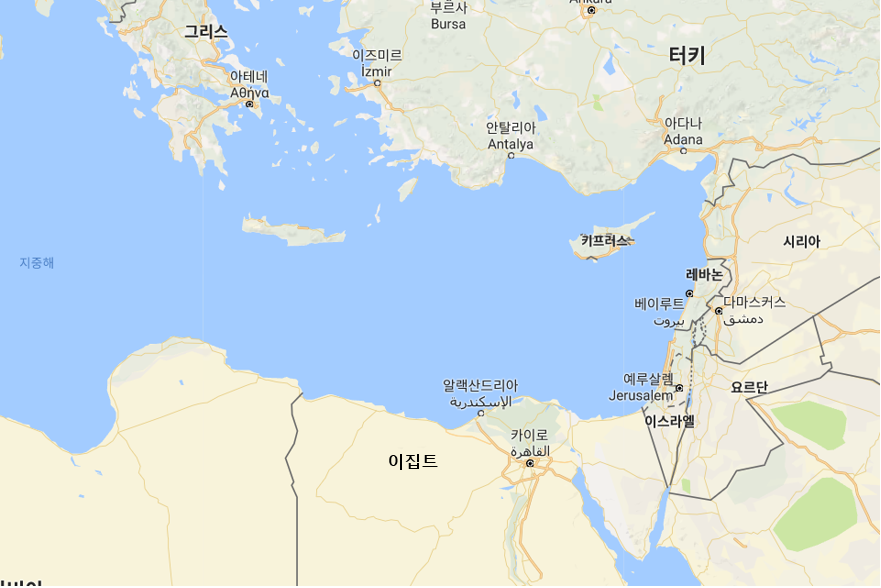 From the time of Abraham, when famine struck the land of Canaan, people often went down to Egypt to seek refuge. The descendants of Jacob even migrated to Egypt and lived there until Moses led them out in the Exodus.
Even during the monarchical period, Egypt's presence was significant, and many warnings were given to the kings of Israel for relying on Egypt rather than on God.
The Oldest Civilization
The Nile River in Egypt repeatedly flooded at regular intervals. As a result, the Nile basin developed into a very fertile plain. People's residences were established in areas safe from flooding, and they farmed in the plains. After harvesting, when the river flooded, nutrient-rich soil from the upper Nile was washed down and covered the farmland. Because of this soil, which was like natural fertilizer, the Nile civilization was the first in human history to form cities.
Overview of Egyptian History
- BCE 3150: Beginning of the Early Dynastic Period of Egypt
- BCE 2686: Beginning of the Old Kingdom of Egypt (Many pyramids were built during this time.)
- BCE 2181: Beginning of the First Intermediate Period
- BCE 2055: Beginning of the Middle Kingdom of Egypt
- BCE 1650: Beginning of the Second Intermediate Period (Hyksos Dynasty) (The era of Joseph (son of Jacob) is presumed to be the late Second Intermediate Period.)
- BCE 1550: Beginning of the New Kingdom of Egypt (The era of Moses's Exodus is presumed to be this period.)
- BCE 1069: Beginning of the Third Intermediate Period
- BCE 664: Beginning of the Late Period of Egypt (Destroyed by Alexander the Great.)
- BCE 322: Beginning of the Ptolemaic Dynasty (After the death of Alexander the Great, it was ruled by his general Ptolemy until it was destroyed by the Roman Empire.)
Hebrew Slaves Did Not Build the Pyramids.
It is a common misconception that Hebrew slaves were involved in building the pyramids during the Exodus. At that time, the Egyptian kingdom no longer built pyramids; instead, many structures were built with bricks. The Book of Exodus also records that they baked clay to build with bricks. (As is known, pyramids are structures built by stacking massive stones.)
In fact, pyramids were mainly built during the Old Kingdom period of Egypt mentioned above. After the chaos of the First Intermediate Period and through the Middle Kingdom, it became impossible to build pyramids, which required immense labor, so construction was done with bricks.
Egypt in the Time of Jesus
In the New Testament era, Egypt was a region under Roman rule, and before that, it was under the rule of the Greek-descended Ptolemaic dynasty. Therefore, the language commonly used in the Egyptian region at that time was Greek.
The hieroglyphs that commonly come to mind when we think of Egypt also died out with the advent of the Ptolemaic dynasty and were replaced by Greek.
The oldest version of the Old Testament, the Septuagint, was translated from the Hebrew Old Testament into ancient Greek in the Alexandria region of Egypt. The period of this work is estimated to be from the 3rd century BCE to the 1st century BCE, which means that by the time Jesus was born, the Septuagint Bible translated into Greek was likely widely circulated.